
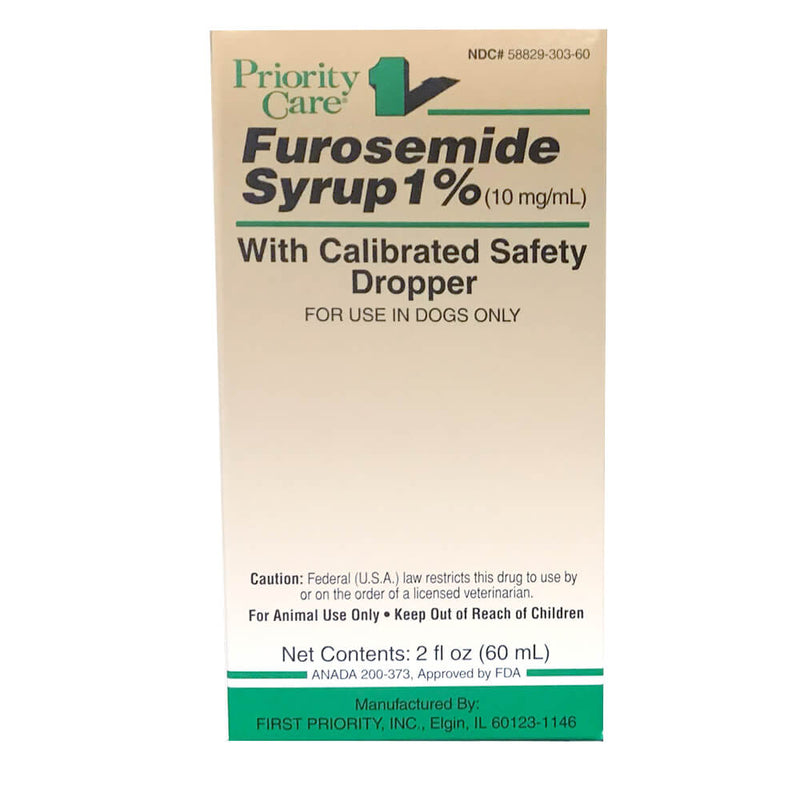


Priority Care
Furosemide Oral Solution for Dogs
Furosemide Oral Solution for Dogs
Couldn't load pickup availability
Product Description + –
Description
Furosemide Oral Solution is used to treat edema associated with cardiac insufficiency and acute noninflammatory tissue edema.
(fur-oh-se-mide)
Benefits
- Helps treat swelling and fluid accumulation casued by heart failure and other health issues
- Highly effective
- Includes calibrated dropper for easy dosing
Consult with your veterinarian for proper dosage and course of treatment.
Safety Information + –
Warnings
FOR USE IN DOGS ONLY. Furosemide Syrup 1% is a highly effective diuretic-saluretic which if given in excessive amounts may result in dehydration and electrolyte imbalance. Therefore, the dosage and schedule may have to be adjusted to the patients’ needs. The animal should be observed for early signs of electrolyte imbalance, and corrective measures administered. Early signs of electrolyte imbalance are: Increased thirst, lethargy, drowsiness or restlessness, fatigue, oliguria, gastrointestinal disturbances and tachycardia. Special attention should be given to potassium levels.
Furosemide Syrup 1% may lower serum calcium levels and cause tetany in rare cases of dogs having an existing hypocalcemic tendency.
Although diabetes mellitus is a rarely reported disease in animals, active or latent diabetes mellitus may on rare occasions be exacerbated by Furosemide Syrup 1%. While it has not been reported in animals, the use of high doses of salicylates, as in rheumatic diseases, in conjunction with Furosemide Syrup 1% may result in salicylate toxicity because of competition for renal excretory sites. Electrolyte balance should be monitored prior to surgery in patients receiving Furosemide Syrup 1%. Imbalances must be corrected by administration of suitable fluid therapy.
Furosemide Syrup 1% is contraindicated in anuria. Therapy should be discontinued in cases of progressive renal disease if increasing azotemia and oliguria occur during the treatment. Sudden alterations of fluid and electrolyte imbalance in an animal with cirrhosis may precipitate hepatic coma; therefore, observation during period of therapy is necessary. In hepatic coma and in states of electrolyte depletion, therapy should not be instituted until the basic condition is improved or corrected. Potassium supplementation may be necessary in cases routinely treated with potassium depleting steroids.
Precautions
Furosemide Syrup 1% is a highly effective diuretic-saluretic which if given in excessive amounts may result in dehydration and electrolyte imbalance. Therefore, the dosage and schedule may have to be adjusted to the patients’ needs. The animal should be observed for early signs of electrolyte imbalance, and corrective measures administered. Early signs of electrolyte imbalance are: Increased thirst, lethargy, drowsiness or restlessness, fatigue, oliguria, gastrointestinal disturbances and tachycardia. Special attention should be given to potassium levels.
Furosemide Syrup 1% may lower serum calcium levels and cause tetany in rare cases of animals having an existing hypocalcemic tendency.
Although diabetes mellitus is a rarely reported disease in animals, active or latent diabetes mellitus may on rare occasions be exacerbated by Furosemide Syrup 1%. While it has not been reported in animals, the use of high doses of salicylates, as in rheumatic diseases, in conjunction with Furosemide Syrup 1% may result in salicylate toxicity because of competition for renal excretory sites. Electrolyte balance should be monitored prior to surgery in patients receiving Furosemide Syrup 1%. Imbalances must be corrected by administration of suitable fluid therapy.
Furosemide Syrup 1% is contraindicated in anuria. Therapy should be discontinued in cases of progressive renal disease if increasing azotemia and oliguria occur during the treatment. Sudden alterations of fluid and electrolyte imbalance in an animal with cirrhosis may precipitate hepatic coma; therefore, observation during period of therapy is necessary. In hepatic coma and in states of electrolyte depletion, therapy should not be instituted until the basic condition is improved or corrected. Potassium supplementation may be necessary in cases routinely treated with potassium depleting steroids.
Food and Drug Interactions
Sulfonamide diuretics have been reported to decrease arterial responsiveness to pressor amines and to enhance the effect of tubocurarine. Caution should be exercised in administering curare or its derivatives to patients undergoing therapy with Furosemide Syrup 1% and it is advisable to discontinue Furosemide Syrup 1% for one day prior to any elective surgery.
Human Warnings
For dog use only. Keep out of reach of children.
Side Effects + –
Possible Side Effects
Side effects include increased need to urinate and possible changes in bowel habits. Be sure to allow your animal the chance to urinate more often, especially when starting this drug or when dosages are increased.
Because furosemide can cause an imbalance in water andelectrolytes (salts) in the body or affect kidney function, your veterinarian will likely want to do bloodtests to check for these effects.
Other serious side effects can include weakness or collapse (passing out), lack of urination, rapid heartbeat, and very rarely, can cause anemia or other problems with blood.
Contact your veterinarian if you believe your pet is experiencing side effects.
Additional Information + –
Product Administration
Oral
Product Form
Liquid
Ingredients
Furosemide
Storage
Store at controlled room temperature (59°-86°F).
Share

2,140 pet parents rate it 5 stars
"Duke thinks it's a treat. I think it's $7 cheaper than the clinic. Everybody wins."
"Vet approval took less than a day. It's on AutoShip now and I never think about fleas anymore."
"Switched from the big-box pharmacy — faster shipping and the reminder emails are actually useful."