Bausch + Lomb
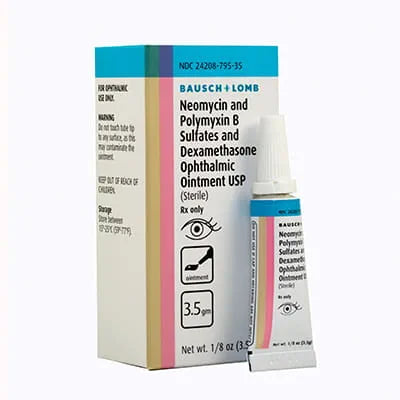
Neo-Poly-Dex Ophthalmic Ointment 3.5gm
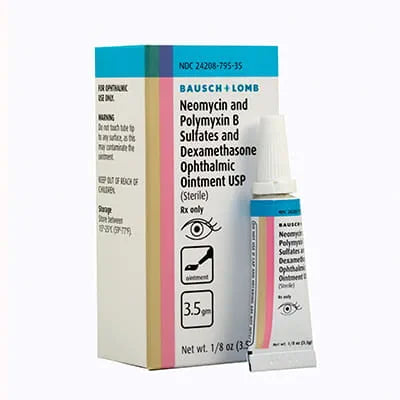
Neo-Poly-Dex Ophthalmic Ointment 3.5gm
Couldn't load pickup availability
Neo-Poly-Dex Ophthalmic Ointment (Neomycin, Polymyxin B, Dexamethasone)
Prescription required.
Product Description
Neo-Poly-Dex is a combination ophthalmic ointment that pairs two antibiotics with a corticosteroid. Neomycin and polymyxin B cover bacterial infection, and dexamethasone addresses the swelling and inflammation that comes with it.
Veterinarians prescribe it for bacterial infections of the eye and eyelid where inflammation is also a problem, and it’s sometimes used preventively against infection following an eye injury. The combination matters because an inflamed eye is painful and swollen enough to interfere with healing, so treating the infection alone often isn’t sufficient.
The ointment base stays in contact with the eye longer than a drop, which means fewer applications through the day and better coverage overnight. It also doesn’t run off a squinting eye the way a solution can.
Specifications
Active ingredients: neomycin sulfate, polymyxin B sulfate, dexamethasone
Form: ophthalmic ointment
Prescription required
How to Use
Use exactly as prescribed. Wash your hands first.
Hold your pet’s head steady, tilt it slightly upward, and pull the lower lid down gently to form a pocket. Apply a small ribbon of ointment along the inside of that lower lid, then let your pet blink to spread it across the eye.
Do not touch the tube tip to the eye, lid, or lashes, and recap it right after use.
If your pet is on more than one eye medication, apply solutions and drops first and ointments last, waiting several minutes between products so the first isn’t pushed out by the second.
Finish the full course your veterinarian prescribed. Stopping when the eye looks better is a common cause of relapse.
Important Safety Information
Federal law restricts this drug to use by or on the order of a licensed veterinarian.
Do not use in an eye with a corneal ulcer, abrasion, or suspected corneal damage. The dexamethasone slows healing and can allow an ulcer to deepen rapidly, which is the most serious risk with any steroid-containing eye product. A fluorescein stain is standard before this is prescribed, which is also why leftover eye medication should never be reused on a new episode or a different animal without an exam first.
Do not use in eyes with an active fungal or viral infection unless your veterinarian specifically directs it.
Corticosteroids applied to the eye can be absorbed systemically, particularly in small animals on extended courses. Tell your veterinarian about all other medications, especially other corticosteroids or NSAIDs, and about diabetes, Cushing’s disease, or any active infection.
Contact your veterinarian if the eye becomes more painful, cloudy, or red, if discharge increases, if your pet squints more, or if there is no improvement on the expected schedule.
Keep out of reach of children. Store as directed on the label. Discard at the end of the prescribed course rather than saving it, and do not use past the expiration date.
Talk to your veterinarian
Eye problems move fast. Squinting, cloudiness, a visible spot or film on the surface, a pupil that looks different from the other side, or pawing at the eye needs same day attention.
Share